Introduction
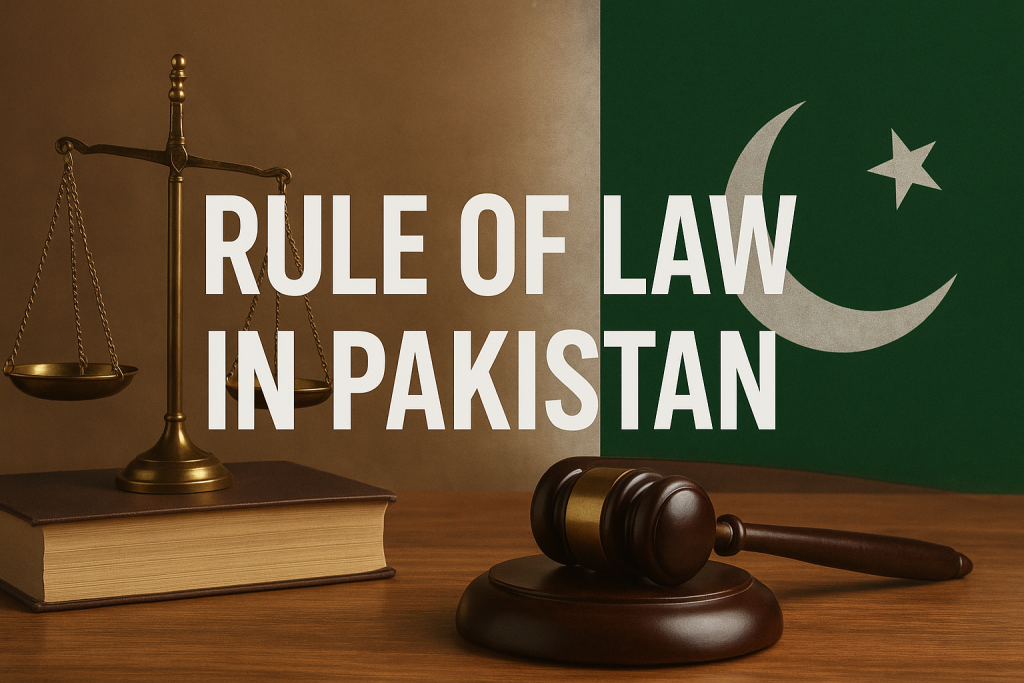
The rule of law is the foundation of any democratic society, ensuring that all citizens, institutions, and government bodies are accountable under the same set of laws. In Pakistan, however, the state of the rule of law remains a subject of deep concern and debate. Despite having a comprehensive legal framework and a strong judiciary, the country continues to face challenges in implementing justice impartially, ensuring equality before the law, and maintaining public trust in legal institutions.
Historical Background
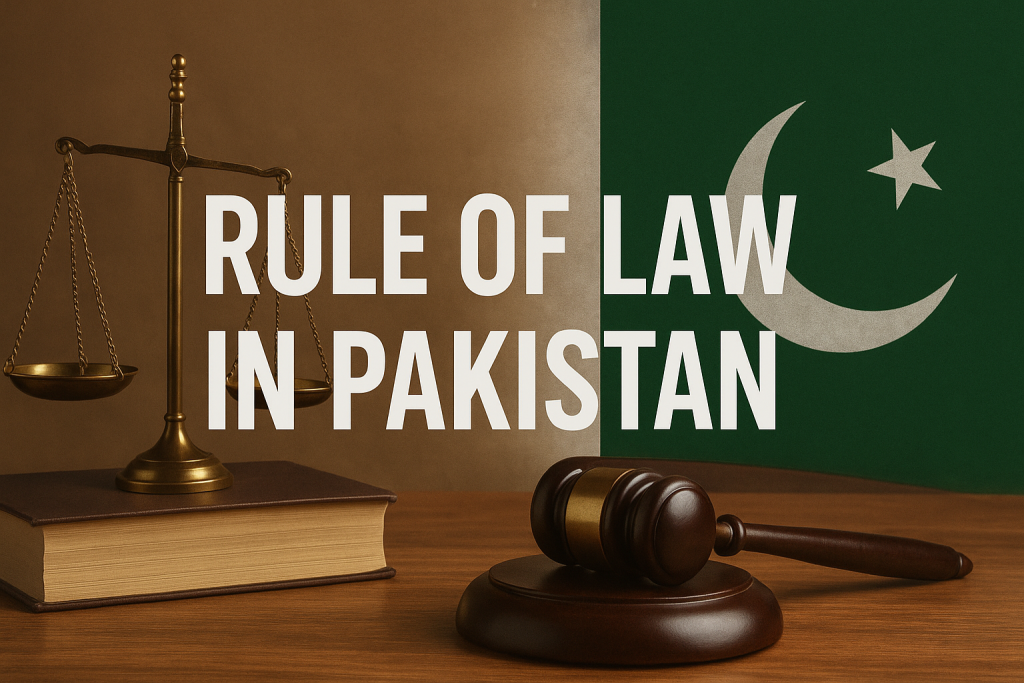
Since its independence in 1947, Pakistan has struggled to establish a consistent and independent legal system. Periods of military rule, political instability, and weak governance have repeatedly undermined judicial independence. While the Constitution of Pakistan enshrines the principle of equality before the law and guarantees fundamental rights, the practical enforcement of these provisions has been inconsistent.
Current Challenges
1. Political Interference in the Judiciary
One of the major obstacles to the rule of law in Pakistan is political influence over the judicial system. Appointments, case prioritization, and verdicts in politically sensitive cases often attract public skepticism. The perception that the judiciary sometimes favors powerful political or military figures has eroded confidence in the impartiality of justice.
2. Corruption and Lack of Accountability
Corruption remains deeply entrenched in many state institutions, including law enforcement agencies. Transparency International’s recent reports place Pakistan among countries where corruption levels remain high. This undermines justice delivery, as ordinary citizens often face bribery, delay, or discrimination in police stations and courts.
3. Weak Law Enforcement
Pakistan’s police system faces numerous issues such as inadequate training, political pressure, poor infrastructure, and limited resources. These weaknesses hinder effective law enforcement and investigation, often leading to low conviction rates and the denial of justice to victims.
4. Delays in the Judicial System
Overburdened courts, procedural complexities, and a shortage of judges have led to an enormous backlog of cases. According to recent data, millions of cases are pending in Pakistan’s courts, some for decades. This delay discourages citizens from seeking legal remedies and promotes out-of-court settlements or informal justice mechanisms that may not ensure fairness.
5. Human Rights Violations and Selective Justice
Instances of enforced disappearances, extrajudicial killings, and restrictions on freedom of expression continue to challenge the rule of law. While the Constitution guarantees civil liberties, implementation remains selective, with certain groups enjoying protection while others face discrimination or neglect.
Recent Developments and Reforms
In recent years, Pakistan has taken some positive steps toward strengthening the rule of law. The digitization of court systems, establishment of model police stations, and the introduction of anti-corruption drives reflect a growing awareness of the problem. The judiciary has also demonstrated independence in certain landmark rulings, asserting its authority over political and executive decisions.
Civil society organizations and media continue to play an essential role in exposing injustices and advocating for accountability. However, these efforts are often hindered by political resistance and institutional inertia.
Public Perception and Global Rankings
Pakistan’s position in the World Justice Project’s Rule of Law Index remains low compared to global standards. In areas such as civil justice, criminal justice, and absence of corruption, Pakistan scores below the regional average. This reflects persistent gaps between law and practice, and between constitutional ideals and real-world experiences of citizens.
The Way Forward
To strengthen the rule of law in Pakistan, a multifaceted approach is required:
- Ensuring Judicial Independence: Judges must be free from political pressure and influence in their decision-making.
- Police Reforms: Enhancing professionalism, accountability, and resources in law enforcement agencies is crucial.
- Reducing Case Backlogs: Modernizing case management systems and increasing the number of judges can speed up justice delivery.
- Anti-Corruption Measures: Strict enforcement of anti-corruption laws and transparency in governance can rebuild public confidence.
- Civic Education: Promoting awareness among citizens about their legal rights can empower them to demand accountability.
Conclusion
The rule of law in Pakistan stands at a crossroads. While the country possesses the legal framework necessary for justice and equality, its implementation remains weak due to political interference, corruption, and institutional inefficiency. For Pakistan to progress as a democratic and prosperous nation, the supremacy of law must be upheld above all individual or institutional interests. A strong, independent, and transparent legal system is not just a constitutional ideal—it is essential for the survival and stability of the state itself.